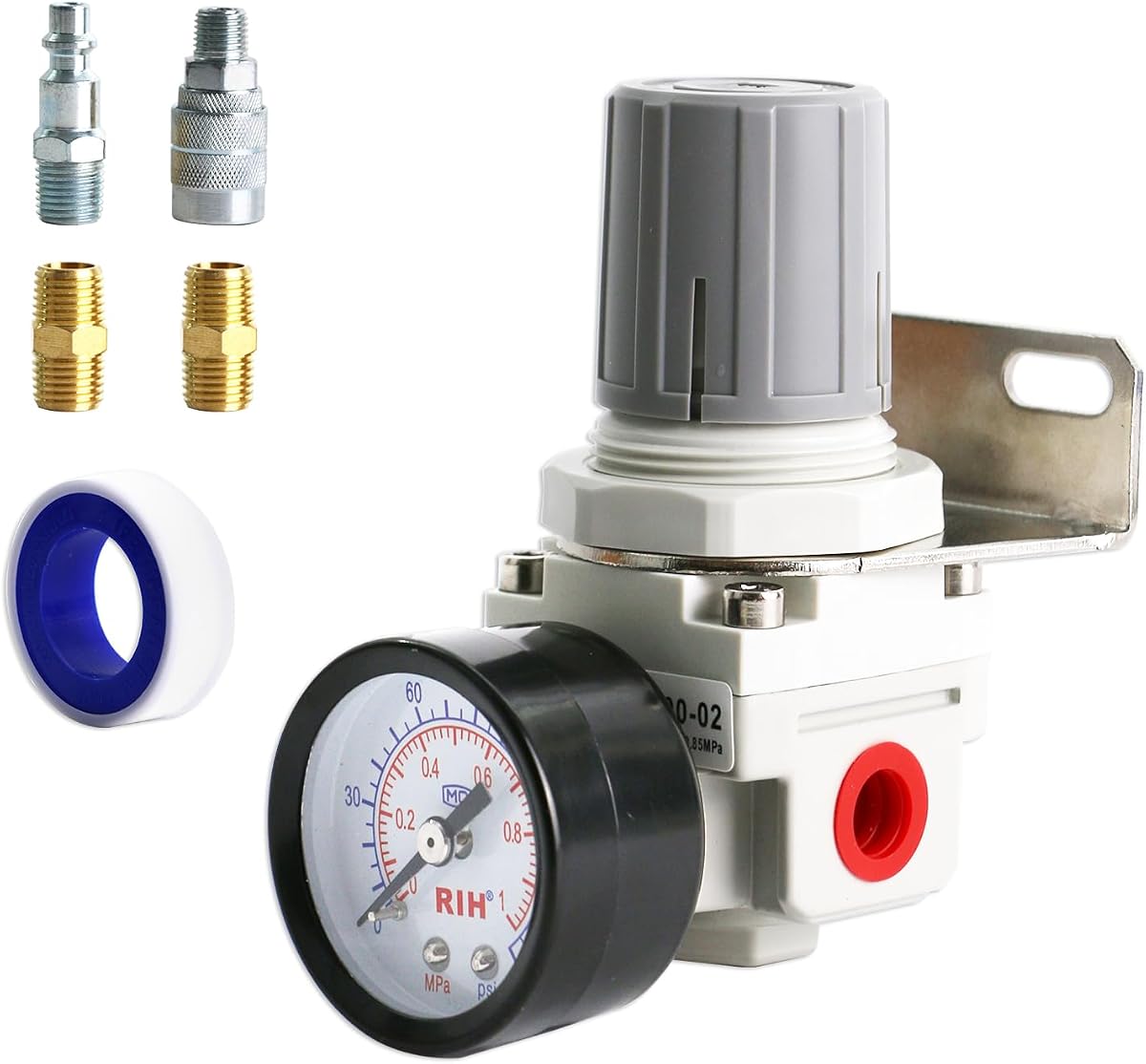
RIH 1/4" NPT Air Pressure Regulator
4.7Editor score
Includes coupler kit and fittings
Aluminum body construction
0-150 PSI gauge included
Choosing the right air pressure regulator ensures your pneumatic tools perform consistently and safely. A good unit stabilizes downstream pressure, protects sensitive equipment, and provides accurate control for various applications like spraying or assembly.
We evaluated ten leading models based on flow capacity, adjustment range, durability, and included accessories. Each product offers unique features suited for different workshop needs, from compact desktop setups to heavy industrial lines.
Each pick highlights key specifications, real-world performance traits, and ideal use cases. Keep in mind that availability and details may vary, so always verify current listings before purchasing your next regulator.
4.7Editor score

4.5Editor score

4.3Editor score
As an Amazon Associate we earn from qualifying purchases.
This side-by-side comparison outlines the key specifications and features of each model to help you quickly identify the right regulator for your specific air system requirements.


This RIH regulator offers excellent value for hobbyists needing reliable pressure control. It holds a 4.7 rating from users who appreciate its complete kit and straightforward design.
We may earn a commission when you buy through this link, at no additional cost to you.
Its aluminum body keeps weight down while handling standard shop tasks. The included coupler kit makes it ready for immediate use without extra purchases.
Flow capacity is limited to 20 SCFM so it suits small air tools. Ensure joints are sealed well to avoid minor leaks during operation.
Choose this model if you need an affordable entry-level unit. It provides essential features like a gauge and bracket for most light-duty setups.
You receive thread seal tape and fittings to connect the regulator quickly without visiting a hardware store for extra parts.
The rotary knob locks in place after setting pressure to maintain consistent output during tool operation.
We may earn a commission when you buy through this link, at no additional cost to you.
This heavy duty regulator handles large volume systems with ease. It earns a 4.5 rating for its robust build and reliable performance in demanding environments.
We may earn a commission when you buy through this link, at no additional cost to you.
With 140 SCFM flow capacity it supports multiple tools simultaneously without pressure drops. The 3/4 NPT connection fits main air lines directly.
The composite knob resists wear from frequent adjustments. Its size may be too bulky for tight workspaces or small benches.
Select this unit for industrial or large workshop setups. It ensures stable pressure delivery even when many devices draw air at once.
The 140 SCFM rate ensures consistent airflow for big tools like sanders or large impact wrenches.
You can set output from 7 to 215 PSI to match various tool requirements precisely.
We may earn a commission when you buy through this link, at no additional cost to you.
This PneumaticPlus model stands out for its safety and compliance. Users rate it 4.5 stars for steady pressure maintenance and protective design features.
We may earn a commission when you buy through this link, at no additional cost to you.
The relieving type vents excess pressure to prevent downstream damage. A push lock knob holds settings firmly against vibration in active shops.
Flow capacity is moderate at 39 SCFM suitable for general shop lines. Ensure correct airflow direction during installation for proper function.
It is the best choice for professional environments requiring certified equipment. Its design prioritizes safety and consistent downstream pressure control.
Excess downstream pressure vents automatically when it rises above your set point to protect tools.
Manufactured to ISO 6953 standards ensuring reliable performance and safety compliance for industrial use.
We may earn a commission when you buy through this link, at no additional cost to you.
Ingersoll Rand is known for industrial grade equipment. This regulator carries a 4.3 rating for its proven track record in professional shops.
We may earn a commission when you buy through this link, at no additional cost to you.
The flush mount gauge provides a clean installation look. It fits well in panels where space is tight and aesthetics matter.
Performance is reliable though flow is moderate for general tasks. The knob is standard without extra locking features but holds settings well.
Choose this if you prioritize brand reputation. It delivers dependable service for routine shop tasks and consistent air pressure needs.
Ingersoll Rand has decades of experience making durable air components for industrial customers.
The flush gauge allows for a streamlined setup on control panels or machine faces.
We may earn a commission when you buy through this link, at no additional cost to you.
This LEMATEC regulator specializes in fine finish work. It has a 4.4 rating for helping users achieve smooth even paint applications.
We may earn a commission when you buy through this link, at no additional cost to you.
Solid brass construction resists corrosion and wears well. The inline valve allows precise control to minimize overspray on automotive jobs.
Flow capacity suits most spray guns though it may not fit large systems. The universal 1/4 NPT threads connect to standard hoses easily.
Select this for detailing or painting setups. It gives you the exact control needed for quality finishes and less waste.
The solid brass body withstands humid environments and chemicals used in painting and finishing.
Adjustable knobs let you fine tune air volume for consistent paint coverage without runs.
We may earn a commission when you buy through this link, at no additional cost to you.
This Primefit unit works well as a direct replacement for older systems. It holds a 4.5 rating for its durability and clear flow indicators.
We may earn a commission when you buy through this link, at no additional cost to you.
The steel protected gauge resists damage from impact in busy shops. The composite knob adjusts easily and locks securely to prevent drift.
Flow is decent at 60 SCFM for most tools. Ensure installation matches the directional flow to prevent operational issues.
Use this when replacing existing regulators in a line. It fits standard setups and keeps your system running smoothly.
The steel shield protects the glass face from accidental hits during maintenance tasks.
Arrows show the correct air flow direction so you install it correctly the first time.
We may earn a commission when you buy through this link, at no additional cost to you.
Milton products are known for quality manufacturing. This regulator earns a 4.3 rating for its reliable construction and domestic production.
We may earn a commission when you buy through this link, at no additional cost to you.
The 3/8 thread suits many industrial applications. Flow reaches 80 SCFM which supports several tools without significant pressure loss.
Operating temp range is standard for most indoor shops. It may not suit extreme environments without additional climate control.
Choose this for shop upgrades where quality matters. It provides consistent control for professional tools and general shop tasks.
Made in the USA under strict quality controls ensuring durable components for long term use.
80 SCFM allows multiple pneumatic devices to operate efficiently without constant cycling.
We may earn a commission when you buy through this link, at no additional cost to you.
This model supports systems needing higher pressure outputs. It has a 4.4 rating for its sturdy build and easy installation features.
We may earn a commission when you buy through this link, at no additional cost to you.
The pull-to-unlock knob allows quick changes and locks once set. Flow arrows ensure you connect inlet and outlet correctly to avoid damage.
Max pressure reaches 225 PSI which suits high demand tasks. The bracket helps mount it securely to a wall or panel.
Use this for setups requiring robust pressure control. It handles high supply pressures while keeping downstream settings stable.
With 225 PSI max this regulator handles demanding systems without compromising output stability.
Clear IN and OUT markings with arrows make connecting the unit simple for any user.
We may earn a commission when you buy through this link, at no additional cost to you.
This regulator offers flexible installation for various layouts. It has a 4.4 rating for its adaptable design and clear pressure monitoring.
We may earn a commission when you buy through this link, at no additional cost to you.
The 1/2 inch port supports higher flow than smaller units. Aluminum construction keeps weight low while resisting corrosion in shops.
Two gauge ports give placement options during setup. The knob locks settings well though it requires careful handling.
Select this when you need port flexibility. It works well for custom systems requiring specific gauge placement or larger ports.
Two ports allow you to install the gauge where it is easiest to read from your position.
Lightweight aluminum resists rust and fits into tight spaces without adding much weight.
We may earn a commission when you buy through this link, at no additional cost to you.
This SNS regulator provides essential control for general use. It holds a 4.2 rating for straightforward functionality and clear user feedback.
We may earn a commission when you buy through this link, at no additional cost to you.
The bracket and gauge are included for immediate setup. The rotary knob adjusts pressure smoothly and stays in place during use.
Flow is modest at 19.4 SCFM so avoid overloading the unit. The aluminum body keeps it light for portable or bench setups.
Use this for basic shop tasks needing stable pressure. It is a reliable choice for routine maintenance and small tool operations.
Included bracket and gauge mean you can install it right away without extra purchases.
The rotary knob turns smoothly so you can fine tune settings without struggling.
We may earn a commission when you buy through this link, at no additional cost to you.
Selecting the right regulator involves matching flow capacity thread size and durability to your system needs. Consider the following factors to ensure safe and efficient performance.
Flow capacity in SCFM determines how much air your regulator can pass without significant pressure drops. Choose a model that meets or exceeds the combined air demand of all tools you plan to run at once.
Always size your regulator slightly larger than your peak usage to maintain consistent pressure.
Thread size such as 1/4 inch 3/8 inch or 3/4 inch must match your air line fittings. Using mismatched threads can cause leaks or require adapters that reduce flow efficiency.
Check your compressor outlets and tool inlets before buying to ensure compatibility.
The adjustable pressure range should cover the requirements of your tools. Most shop tools operate between 70 and 90 PSI but some heavy duty machines may need higher outputs.
Select a regulator with a range that exceeds your highest tool requirement for safety.
Materials like aluminum or brass affect durability and corrosion resistance. Aluminum is lighter and resists rust while brass handles heat and chemicals better in harsh environments.
Choose based on your shop conditions and how often the unit will be exposed to moisture.
Relieving regulators vent excess downstream pressure when it exceeds your set point. This feature protects sensitive tools from over pressurization due to upstream pressure surges.
Opt for relieving types when working with expensive or delicate equipment.
A wall or panel mounting bracket keeps the regulator secure and reduces vibration damage. Units without brackets require you to source a holder which adds time and cost.
Look for models with included brackets if you plan to mount it permanently.
A steel shield or protected gauge prevents damage from accidental impacts. This ensures long term accuracy and avoids costly replacements.
Prioritize units with protected gauges in active workshop environments.
Brands with industrial experience often provide better quality control and support. Established names may offer longer warranties and more reliable parts availability.
Consider manufacturer reputation when selecting critical components for your system.
Begin by installing the regulator in the correct direction using flow arrows or IN OUT markings. Tighten connections securely using thread sealant to prevent leaks at joints.
Set your desired pressure by pulling the knob unlocking and rotating clockwise to increase. Lock the knob to hold the setting during tool operation.
Check the gauge regularly and clean dust from the unit to maintain accuracy. Replace worn seals if you notice air escaping from the knob or joints.
An air pressure regulator controls the downstream pressure from your compressor to keep it stable regardless of tank pressure. It allows you to set the exact pressure needed for each tool for safe and consistent operation.
A gauge is essential for monitoring output pressure to ensure your tools receive the correct air volume. Without it you may not realize pressure has drifted which can lead to poor results or tool damage.
Select a regulator based on the SCFM demand of your tools and the thread size of your air lines. Larger tools or multiple devices require higher flow capacities to avoid pressure loss during use.
A relieving regulator vents excess downstream pressure to protect equipment from upstream surges. Non-relieving units do not release pressure so they are less safe for sensitive tools.
You can use one regulator if all your tools operate within the same pressure range. However different tools often need specific pressures so multiple regulators or adjustable settings are better.
Replace your regulator if you notice leaks unsteady pressure or a damaged gauge. Regular maintenance and using proper seals can extend its lifespan significantly in most shops.
Yes you should use PTFE tape or thread sealant to prevent air leaks at all connections. This ensures the regulator holds pressure properly and avoids wasted compressed air.
Most pneumatic tools operate between 70 and 90 PSI though some may require higher values. Always check the tool manufacturer's recommended pressure before setting your regulator.
Your top picks include the RIH Budget model the PneumaticPlus Editor Choice and the Ingersoll Rand Premium option. Each brings unique strengths for different workshop sizes and usage patterns.
Focus on matching flow capacity and thread size to your existing air system. Safety features like relieving designs and gauge protection should also influence your decision.
Verify current availability and details before purchasing to ensure you receive the right unit for your setup. Regular maintenance will keep your chosen regulator performing reliably for years.