
Corded Landline Phones for Seniors
4.2Editor score
Large picture buttons
110dB loud ringer
Hands-free calling
Discover the best captioned telephone options for hearing loss. This guide compares top models with real-time captions, amplified sound, and user-friendly
Finding the right captioned telephone is essential for seniors and individuals with hearing loss who want to stay connected with loved ones. These specialized devices combine traditional phone functionality with real-time text captions, ensuring conversations are clear and confident. By choosing a model that fits specific needs, users can enjoy seamless communication without missing important words.
Our team evaluated ten top-rated captioned phones based on clarity, ease of use, and additional accessibility features. We looked at real-time captioning accuracy, volume amplification levels, and intuitive designs for users with visual or memory impairments. Each product offers unique benefits tailored to different environments, from home use to assisted living facilities.
Every pick in this guide highlights key features like large displays, amplified sound, and voice dialing capabilities to help you make an informed decision. Please note that prices and availability can change frequently, so checking current listings is recommended before purchasing. This comprehensive overview ensures you find the perfect captioned telephone for your lifestyle.
4.2Editor score

4.3Editor score
4.5Editor score
This side-by-side comparison highlights the key specifications and features of all ten captioned telephone models to help you identify the best fit for your needs.


The Hamilton CapTel 2400iSPNBT stands out as a leading captioned telephone for individuals with hearing loss. It features a large touchscreen that displays real-time captions, allowing users to listen and read conversations simultaneously. This dual approach ensures no words are missed during important calls.
We may earn a commission when you buy through this link, at no additional cost to you.
Its amplified sound reaches up to 40dB, making it suitable for seniors who need extra volume clarity. The device supports both auto captions and assisted captions with live operator support, providing flexibility in how conversations are managed. Additionally, voicemail captions are displayed directly on the screen for easy review.
While the phone requires high-speed internet and service registration, these requirements ensure reliable captioning accuracy. The on-screen navigation is customizable, allowing users to adjust caption size and tone to fit their comfort levels. This level of customization enhances the overall user experience significantly.
This model is ideal for users who prioritize clear, confident conversations with loved ones. Its combination of features makes it a top choice for those seeking a comprehensive captioned telephone solution. Investing in this device can greatly improve daily communication for hearing-impaired individuals.
The real-time captions ensure every word is visible, reducing misunderstandings and enhancing conversation flow.
Voicemail captions allow users to review messages visually, ensuring no important information is missed.
We may earn a commission when you buy through this link, at no additional cost to you.
The Corded Landline Phones for Seniors offers an affordable and practical solution for those with memory or visual impairments. It features nine large picture buttons that allow users to dial contacts by seeing their photos, eliminating the need to remember numbers. This design is especially helpful for seniors with dementia or Alzheimer's.
We may earn a commission when you buy through this link, at no additional cost to you.
Its 110dB loud ringer ensures that calls are never missed, even in noisy environments. The phone is powered by a standard RJ11 line, meaning no batteries or Wi-Fi are required, providing reliability during power outages. Hands-free calling adds convenience for those with arthritis or weak grip strength.
While the SOS button must be programmed manually and lacks automatic dialing, it provides an added layer of safety. The phone's simple setup process makes it accessible for users living independently or in assisted living facilities. Its lack of internet dependency ensures consistent performance.
This model is perfect for users who need a straightforward, reliable phone without complex features. The photo dialing and loud ringer make it a budget-friendly option that prioritizes ease of use. It serves as a warm link to family bonds for seniors with special needs.
Photo buttons make calling effortless by replacing numbers with familiar faces, aiding memory retention.
No battery or Wi-Fi dependency ensures the phone works even during power outages or storms.
We may earn a commission when you buy through this link, at no additional cost to you.
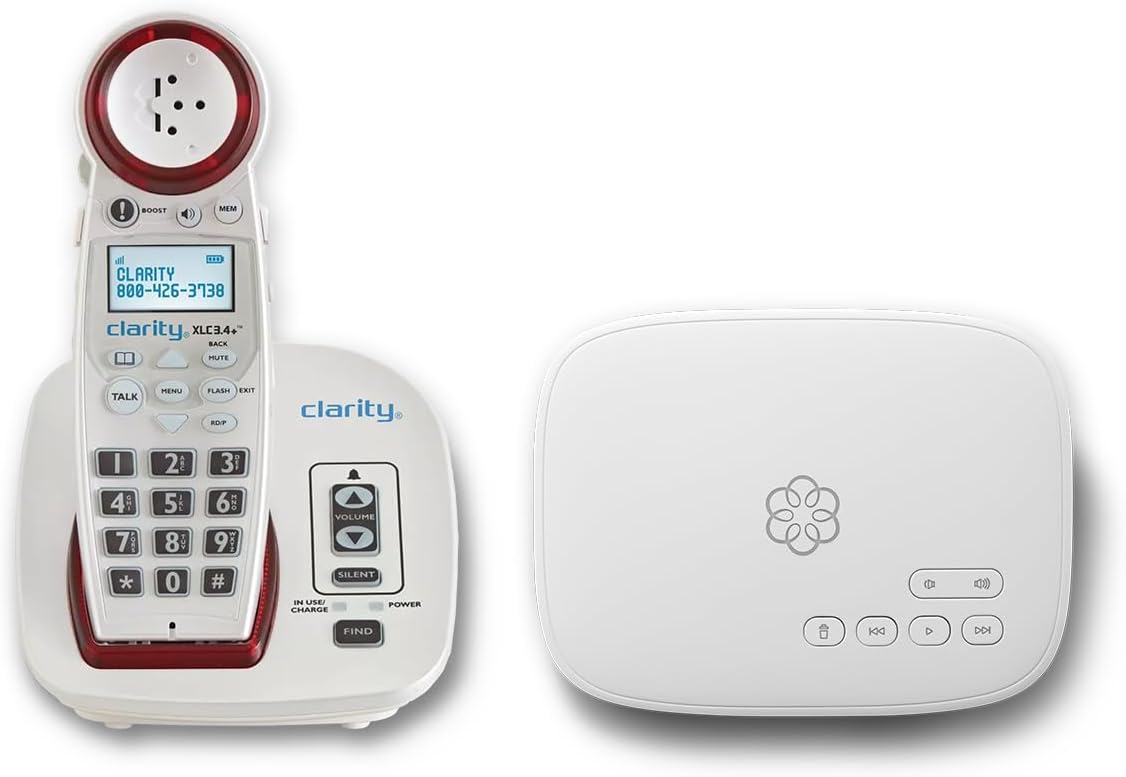
The Ooma Telo with Clarity XLC3.4+ bundle combines advanced phone service with an amplified cordless handset designed for hearing-impaired users. It offers unlimited nationwide calling and includes a 24/7 concierge plan for setup assistance and ongoing support. This premium package ensures users stay connected with clarity and convenience.
We may earn a commission when you buy through this link, at no additional cost to you.
Key features include a visual ringer and adjustable volumes, making it easier for seniors to detect incoming calls. The talking keypad provides auditory feedback when dialing, while call blocking protects against robocalls and telemarketers. Address-based 911 alerts send location details to dispatchers for safety.
Although a monthly subscription fee is required, the service provides extensive benefits like text alerts for 911 calls and porting existing numbers. The bundle includes personal setup assistance, ensuring a smooth installation process. White-glove customer support adds value to the premium experience.
This option is ideal for users seeking a comprehensive phone solution with enhanced safety features. Its combination of service and hardware makes it a top choice for those who prioritize reliability and convenience. The subscription model offers long-term benefits that justify the investment.
Text alerts and address-based 911 ensure loved ones are notified of emergencies instantly.
The talking keypad confirms every button press audibly, aiding users with low vision.
We may earn a commission when you buy through this link, at no additional cost to you.
The VTech SN5147 is a hybrid phone system that works during power outages with its corded base while providing mobility through a cordless handset. It includes a 90dB extra-loud ringer and a one-touch volume boost up to 50dB louder, making it highly accessible for seniors with hearing loss.
We may earn a commission when you buy through this link, at no additional cost to you.
Its oversized buttons and large backlit display simplify dialing and reading caller ID for users with arthritis or low vision. The phone features a smart call blocker that can prevent up to 1,000 robocalls and includes four photo speed dial slots. A 22-minute answering machine with remote access adds convenience.
While the cordless handset relies on battery power, the corded base ensures reliability during outages. The expandable system allows up to four handsets, making it suitable for larger homes. Flashing visual indicators alert users to incoming calls even in noisy environments.
This model is well-suited for seniors who need both mobility and reliability in a phone system. Its amplified sound and user-friendly design make it a dependable choice for everyday communication. The answering machine and call blocking features enhance its practicality for home use.
The corded base ensures calls can be made even during power outages, providing peace of mind.
Blocking robocalls reduces unwanted interruptions, allowing seniors to focus on important contacts.
We may earn a commission when you buy through this link, at no additional cost to you.
The Answer Dial Hang-Up Voice telephone is designed for users with mobility or vision difficulties, allowing them to manage calls entirely through voice commands. It uses the home phone line and requires no button presses to activate, answering, or ending calls. This hands-free approach simplifies communication significantly.
We may earn a commission when you buy through this link, at no additional cost to you.
Its active listening feature ensures the phone is always ready to respond to voice commands, providing convenience for those who struggle with traditional dialing. The quality of the device focuses on reliability and ease of use for individuals with physical limitations. It integrates seamlessly into existing home phone setups.
While it lacks user ratings due to its specialized nature, its design addresses specific accessibility challenges effectively. The phone eliminates physical barriers to making calls, making it suitable for users with hand tremors or severe vision impairment. Its simplicity is a major advantage for target audiences.
This telephone is ideal for individuals who prioritize voice control over traditional keypad functions. Its ability to handle all call actions via voice makes it a unique solution for accessibility. Users seeking a truly hands-free experience will find this model highly beneficial.
Voice control removes the need to hold the handset, aiding users with limited mobility.
The phone stays ready to respond to commands, ensuring immediate access to calling features.
We may earn a commission when you buy through this link, at no additional cost to you.
The Big Button Phone for Elderly is a straightforward corded landline designed to meet varying hearing needs with up to 40dB amplified volume. It features large buttons and replaceable picture buttons that store favorite contacts, making dialing intuitive for seniors with low vision or cognitive impairments.
We may earn a commission when you buy through this link, at no additional cost to you.
Stored phone numbers are protected even if the line is unplugged, ensuring no data loss during power interruptions. The phone is wall mountable or can be used on a desktop, with nonskid pieces to prevent slipping. This flexibility allows users to position the phone for optimal accessibility.
While it offers basic functionality, its focus on amplification and large buttons addresses core accessibility requirements effectively. The memory protection feature adds reliability for users who depend on stored contacts for daily communication. Its simplicity ensures ease of use without overwhelming complexity.
This model is ideal for seniors who need an amplified, easy-to-use phone without advanced features. Its picture buttons and wall-mount design make it adaptable for various home environments. It serves as a reliable tool for maintaining connections with loved ones.
Up to 40dB amplification ensures conversations are clear for those with significant hearing loss.
Replaceable picture buttons allow users to call favorites without memorizing numbers.
We may earn a commission when you buy through this link, at no additional cost to you.
The FLYINGVOICE FIP12WP is a specialized VoIP phone designed for seniors with dementia, featuring customizable image keys that insert family photos for easy connection. Its large buttons and dedicated help key provide simplicity and safety for users in nursing homes or at home. The handset offers over 90dB volume with speakerphone exceeding 110dB.
We may earn a commission when you buy through this link, at no additional cost to you.
Visual red light alerts notify users of incoming calls or missed messages, aiding those with hearing impairments. The phone is wall-mountable, preventing accidental knock-overs, and its design prioritizes safety for elderly individuals. It is suitable for various settings like hospitals or assisted living facilities.
Pros it is not compatible with traditional analog jacks and requires an active VoIP service, its features make it a valuable tool for tech-enabled environments. The image keys bring familiarity and comfort, helping users remember who they are calling. This thoughtful design enhances usability for those with cognitive challenges.
This model is perfect for seniors in care facilities or homes with internet-based phone systems. Its focus on visual cues and amplification ensures effective communication without complexity. It offers a modern solution for staying connected through VoIP technology.
Custom image keys insert photos to help dementia patients recognize who they are calling.
Wall mounting and visual alerts ensure the phone is secure and calls are not missed.
We may earn a commission when you buy through this link, at no additional cost to you.
The Serene Innovations High Definition Amplified Phone is designed for performance, offering high-quality audio tailored for seniors who need clear sound. Its amplified features ensure conversations are heard clearly, addressing common hearing challenges. The device focuses on delivering reliable communication without unnecessary complexity.
We may earn a commission when you buy through this link, at no additional cost to you.
While specific features are not detailed, its reputation for high-quality products suggests a commitment to user satisfaction. The phone's design prioritizes sound clarity, making it suitable for those with moderate to severe hearing loss. It aims to provide a straightforward and effective calling experience.
Pros it has a lower rating compared to other models, its core focus on audio performance remains a strong selling point. Users seeking a basic amplified phone may find it meets their needs without advanced requirements. It serves as a dependable option for everyday use.
This model is ideal for individuals who prioritize sound quality over additional features. Its performance-oriented approach ensures conversations remain clear and accessible. It is a practical choice for those needing reliable amplified communication.
High-definition audio ensures every word is heard clearly, reducing strain during calls.
The phone is tailored for senior needs, simplifying use for older adults.
We may earn a commission when you buy through this link, at no additional cost to you.
The Voice Dialer Phone is the world's first all-in-one phone with voice dialing, allowing users to make, end, and answer calls by voice without touching the device. It includes three voice commands and 17 programmable voice memories, making it a powerful tool for users with mobility or vision challenges. The device features an LCD display and talking caller ID.
We may earn a commission when you buy through this link, at no additional cost to you.
Its visual LED ring indicator ensures calls are not missed in noisy environments, while hands-free volume control supports accessibility. The phone includes a prefix feature that speaks numbers before dialing and has a programmable 911 button. Memory backup ensures contacts are never lost.
While user ratings are low, its unique voice-control features offer distinct advantages for specific needs. The talking caller ID and memory backup provide helpful support for users who struggle with traditional interfaces. It aims to simplify communication through auditory and visual cues.
This model is suitable for individuals who prioritize voice commands and hands-free operation. Its features make it a versatile option for those with special needs who require auditory assistance. Users should consider its functionality against their specific accessibility requirements.
Voice dialing allows complete hands-free operation, ideal for users with limited mobility.
Talking caller ID and number prompts help users confirm information before connecting.
We may earn a commission when you buy through this link, at no additional cost to you.
This Corded Landline Phone features nine photo memory keys, allowing seniors with memory loss to press a photo to make a call instantly. It supports adjustable extra-loud volume with ringtones over 110dB and earpiece volume exceeding 90dB for clear reception. Hands-free calling makes operation effortless for users with mobility limitations.
We may earn a commission when you buy through this link, at no additional cost to you.
The phone includes an LED call flash alert to notify users of incoming calls visually, ensuring important calls are not missed. It stores numbers in just four steps and requires no batteries or power supply, relying solely on a standard RJ11 line. Its design prioritizes family bonds through simple communication.
While it does not support caller ID or voicemail functions, its focus on one-touch dialing and amplification meets core accessibility needs. The redial/flashback features add convenience for users who may dial numbers incorrectly. Its simplicity makes it ideal for daily home care or professional settings.
This model is perfect for seniors with cognitive impairments who need a straightforward way to connect with loved ones. Its loud ringer and photo memory keys ensure effective communication without complex requirements. It serves as a reliable bridge to family bonds.
Photo keys eliminate the need to memorize numbers, aiding those with cognitive challenges.
The 110dB ringer and visual alerts ensure calls are never missed even in noisy environments.
We may earn a commission when you buy through this link, at no additional cost to you.
Choosing the right captioned telephone involves evaluating key factors such as amplification, ease of use, and connectivity options to ensure it meets specific accessibility needs.
Captioned telephones use various methods to display text during calls, such as real-time captioning via internet services. Look for models that offer both auto captions and assisted captions to ensure accuracy and reliability in communication. Some devices also support voicemail captions, which allows users to review missed messages visually.
Prioritize devices with clear, large displays that allow you to read captions comfortably. This feature is essential for ensuring conversations are not missed due to visual or hearing limitations.
Amplification is crucial for users with hearing loss, with levels ranging from 40dB to over 110dB for ringtones. Check the handset and speakerphone volume capabilities to ensure they meet your specific hearing requirements. Adjustable volume settings provide flexibility to adapt to different environments.
Choose a model with sufficient amplification to hear conversations clearly without strain. This ensures that important calls are not missed due to low sound levels.
Accessibility features like photo dialing, voice dialing, and large buttons simplify the process of making calls. Models with customizable picture buttons are especially helpful for those with memory impairments or dementia. Voice-activated options allow for hands-free operation without physical interaction.
Look for dialing features that match the user's physical and cognitive abilities. Simplicity in dialing ensures independent use and reduces frustration during daily communication.
Some captioned phones require high-speed internet for real-time captioning, while others operate on traditional analog lines. VoIP-compatible models may offer additional features but depend on stable internet service. Verify your home network capabilities before purchasing.
Ensure the phone's connectivity matches your existing setup. Internet-dependent models may offer advanced features but require consistent service availability.
Visual indicators such as flashing lights or LED alerts are essential for users who may not hear ringtones due to severe hearing loss. These alerts ensure that incoming calls are detected even in noisy environments. Some devices also have visual ringer alerts for better awareness.
Select a model with prominent visual alerts to avoid missing calls. This feature is particularly important for those living in noisy homes or with significant hearing loss.
Safety features like dedicated emergency keys, address-based 911 alerts, and call blocking protect users from unwanted calls and emergencies. Some models include programmable SOS buttons or help keys for instant assistance. Consider what safety tools are necessary for the user's environment.
Safety features provide peace of mind for both the user and their loved ones. Prioritize models that offer robust emergency and protection capabilities.
Many captioned phones require service plans or subscriptions for features like unlimited calling and concierge support. Evaluate monthly fees against the benefits provided to ensure they align with your budget. Some bundles include personal setup assistance and call blocking services.
Understand the long-term costs associated with the phone's service. Subscription models may offer valuable support but require ongoing financial commitment.
Phones designed for seniors often include nonskid bases, wall-mountable options, or durable casings for longevity. Consider where the phone will be placed and whether it requires mounting or a stable desktop surface. Wall mounts prevent accidental knock-overs in high-traffic areas.
Ensure the phone's physical design suits your home environment. Durability and flexible placement options contribute to a safe and convenient setup.
To get started with your captioned telephone, read the setup instructions carefully to ensure proper connection to power and phone lines or internet. Activate any required service plans or registrations before making your first call. Adjust volume settings and caption preferences to your comfort level.
Regularly check the phone's buttons and screen for responsiveness. Keep the device free from dust and debris by wiping it with a soft, dry cloth. Avoid exposing it to moisture or extreme temperatures to prevent damage to sensitive components.
For users with memory impairments, keep a written list of key contacts near the phone. Train family members on how to assist with settings adjustments if needed. Periodically test all features like voicemail and caller ID to ensure they function correctly.
A captioned telephone is a specialized device that displays real-time text captions of the conversation on a screen while you listen. It uses internet-based captioning services to convert speech to text, allowing users with hearing loss to read what is being said. Both incoming and outgoing calls can be captioned for full clarity.
Many captioned phones, especially those with real-time captioning, require high-speed internet to function properly. However, some basic amplified models may operate on traditional analog lines without internet. Check specific product requirements to confirm compatibility with your setup.
Many captioned telephone services are free to users through federal or state programs, but some may require registration or specific eligibility criteria. Additional features like unlimited calling or concierge support may involve monthly subscription fees. Always review service terms before committing.
Yes, many captioned phones designed for seniors include features like photo dialing and large buttons that simplify use for those with dementia. These visual cues help users recognize contacts and make calls without memorizing numbers. Choose models specifically marketed for memory impairment.
Most captioned phones for seniors offer amplified ringtones ranging from 90dB to over 110dB to ensure calls are heard. Some models also include visual indicators like flashing lights to alert users visually. Adjustable volume settings allow customization to individual hearing needs.
Corded models typically continue working during power outages as they draw power from the phone line. However, cordless or internet-dependent models may lose functionality until power is restored. Check if the phone has a corded base or battery backup for reliability.
In summary, the best captioned telephone depends on your specific needs for amplification, dialing simplicity, and connectivity. The Hamilton CapTel 2400iSPNBT offers top-tier captioning, while budget-friendly options like the Corded Landline Phones for Seniors provide essential features affordably. Premium bundles like the Ooma Telo offer comprehensive service support.
Prioritize features such as visual alerts, photo dialing, or voice control based on your mobility and cognitive requirements. Ensure the device's compatibility with your home phone system or internet setup before purchasing. Safety features like SOS buttons add peace of mind for caregivers.
Always check current prices and availability as these can change frequently. Selecting the right captioned telephone ensures you stay connected with loved ones clearly and confidently. Invest in a model that offers the best balance of functionality and accessibility for your daily life.