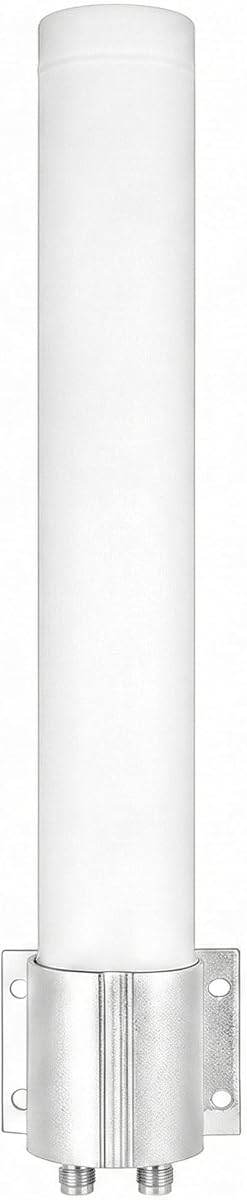
Pro-Gain 2.4G/5.8G MIMO WIFI Antenna
4.5Editor score
MIMO technology support
High gain performance
Fiberglass construction
Discover the top rated marine WiFi antenna options for boats. This guide compares ten models by gain, durability, and frequency support for reliable offshore
Reliable internet at sea is essential for modern navigation and communication. A marine WiFi antenna extends your range by capturing distant shore signals effectively and efficiently.
We compared ten top models based on gain, weather resistance, and connectivity standards. Each product offers unique strengths for different boating and remote internet needs.
Every pick includes detailed specs and real-world performance insights. Prices vary by retailer so check current listings before making your final purchasing decision today.
4.5Editor score

5.0Editor score

4.2Editor score
Below you will find a side-by-side comparison of all ten marine WiFi antenna models evaluated in this guide to help you choose the right fit.


The Poynting Omni-496 stands out as the best overall marine WiFi antenna due to its robust construction and high performance specs.
We may earn a commission when you buy through this link, at no additional cost to you.
Its dual-band support for 2.4 GHz and 4.9 to 7.2 GHz ensures compatibility with modern Wi-Fi standards including Wi-Fi 6e and Wi-Fi 7.
While it costs more than generic options the investment pays off in reliability and longevity when exposed to harsh marine environments daily.
Boaters needing consistent internet connectivity offshore should prioritize this antenna for its proven durability and superior signal gain capabilities.
Supports 2.4 GHz through 7.2 GHz bands ensuring future-proof compatibility with next-generation wireless standards.
IP68 rating and MIL-STD salt spray certification guarantee operation in the harshest coastal conditions.
We may earn a commission when you buy through this link, at no additional cost to you.
This antenna delivers premium performance with MIMO technology optimized for remote offices and marine environments with challenging signal conditions.
We may earn a commission when you buy through this link, at no additional cost to you.
Its engineered VSWR of 1.8 minimizes signal loss allowing 2.4G and 5.8G signals to penetrate obstacles like dense foliage or metal roofs.
Installation requires high-quality low-loss cables and silicone tape to maintain performance which may add to the total setup time.
Ideal for enterprise setups or serious cruisers needing lag-free video conferencing and streaming in remote or coastal locations.
VSWR of 1.8 ensures maximum power efficiency and minimal reflection loss for stable speeds.
Fiberglass construction withstands temperatures from -40°F to 150°F without degrading in salt spray.
We may earn a commission when you buy through this link, at no additional cost to you.
The ALFA antenna offers exceptional value with 9 dBi gain and a weatherproof outdoor design suitable for marine applications.
We may earn a commission when you buy through this link, at no additional cost to you.
Its integrated N-Female connector simplifies cable attachment making it user-friendly for DIY installs without extra adapters.
You will need to source your own coaxial cable or device with N-male connection to complete the setup.
Perfect for boaters seeking a reliable upgrade without breaking the bank on a dedicated marine-specific antenna model.
Delivers 9 dBi gain to significantly extend wireless signal strength for routers and access points.
Fiberglass construction ensures easy installation while maintaining weather resistance.
We may earn a commission when you buy through this link, at no additional cost to you.
This version of the Omni-496 focuses on coastal and marine use with 7.5 dBi gain and a 1-inch marine standard mount.
We may earn a commission when you buy through this link, at no additional cost to you.
It supports Wi-Fi WiMAX and LTE frequencies from 2400 MHz to 6000 MHz for broad compatibility with mobile networks.
The mounting bracket is not included and there is no cable in the package requiring additional purchases for setup.
It remains a solid choice for boaters who already own compatible cables and need a robust omni-directional antenna.
Supports 2.4 GHz 3.3 to 3.8 GHz and 5 GHz bands for wide compatibility.
Robust IP68 design stands up to tempestuous weather and saltwater corrosion.
We may earn a commission when you buy through this link, at no additional cost to you.
This puck antenna combines 4G WiFi and GPS functions in one unit with 24-inch leads for flexible installation.
We may earn a commission when you buy through this link, at no additional cost to you.
Its through-hole mount allows a discreet low-profile setup ideal for smaller vessels where space is limited.
While specs are minimal the weatherproof design makes it suitable for outdoor marine environments effectively.
Best for users needing a compact multi-antenna solution that simplifies cabling and deck clutter.
Combines cellular WiFi and GPS into a single puck antenna for streamlined installation.
Through-hole installation preserves deck aesthetics while maintaining weatherproof integrity.
We may earn a commission when you buy through this link, at no additional cost to you.
Engineered for demanding enterprise marine and IoT applications this antenna delivers reliable multi-carrier 4G LTE and 5G NR support.
We may earn a commission when you buy through this link, at no additional cost to you.
Its heavy-duty injection molded ABS housing ensures resilience against harsh conditions and is approved for federal agencies.
The leads are only one foot long which may restrict mounting options depending on your router placement on board.
Best suited for professionals needing robust cellular backup connectivity rather than primary Wi-Fi extension.
TAA compliant and approved for federal state and local agency use in marine environments.
Compliant with multiple carriers ensuring flexibility across different networks.
We may earn a commission when you buy through this link, at no additional cost to you.
This dual-band antenna provides 3dBi gain and supports both 2.4GHz and 5GHz bands for various wireless devices.
We may earn a commission when you buy through this link, at no additional cost to you.
The RP-SMA male connector is compatible with many routers adapters and cameras making it versatile for DIY setups.
It lacks explicit marine hardening so it is better suited for protected onboard areas rather than exposed masts.
A practical low-cost solution for extending Wi-Fi on internal systems or protected areas of small boats.
Works with routers USB adapters and security cameras requiring RP-SMA connectors.
Two-pack allows easy replacement or diversity setups without significant investment.
We may earn a commission when you buy through this link, at no additional cost to you.
This combo antenna combines 2x 4G LTE and 1x Dual-Band WiFi in one unit with RG174 cables for connectivity.
We may earn a commission when you buy through this link, at no additional cost to you.
Its IP67 waterproof rating ensures reliable performance in outdoor environments with an operating temperature up to 85 degrees.
The 40cm cables may be too short for many marine installations requiring additional extension cables.
Best for RVs or vehicles where roof mount simplifies setup and global LTE bands are needed for travel.
Integrates two cellular and one WiFi antenna to reduce cabling complexity.
Operates reliably from -40C to +85C ensuring durability in varied climates.
We may earn a commission when you buy through this link, at no additional cost to you.
With 9dBi high gain this antenna boosts wireless signal strength significantly for routers and access points in outdoor settings.
We may earn a commission when you buy through this link, at no additional cost to you.
It supports 2.4GHz and 5GHz/5.8GHz frequencies making it versatile for a wide range of wireless security and video devices.
While not explicitly marine rated its outdoor readiness makes it a viable budget option for protected boat areas.
A straightforward upgrade for improving existing wireless setups without complex wiring or equipment.
The 9dBi design significantly increases signal reach for distant connections.
Works with security cameras routers and other wireless devices broadly.
We may earn a commission when you buy through this link, at no additional cost to you.
This VHF antenna covers marine channels and NOAA weather frequencies with a PL259 connector and ratchet mount for storage.
We may earn a commission when you buy through this link, at no additional cost to you.
Its fiberglass radome with anti-corrosion finish ensures longevity against UV and saltwater exposure effectively.
It is designed for VHF radios not WiFi routers so it does not directly extend wireless internet but remains essential for safety.
Every boat should consider this for emergency communications regardless of other WiFi antenna choices onboard.
Covers Channel 16 and NOAA weather for distress safety and real-time alerts.
Ratchet mount allows quick folding for low clearance or storage.
We may earn a commission when you buy through this link, at no additional cost to you.
Selecting the right marine WiFi antenna requires considering frequency, gain, durability, and connector type to match your vessel and usage needs.
Ensure the antenna supports 2.4 GHz and 5 GHz bands or higher for compatibility with modern routers.
Dual-band support allows flexibility as networks migrate to newer standards.
Gain measured in dBi determines how far the antenna can pull signals from shore.
Higher dBi values like 9 dBi offer better reach but require accurate aiming.
Common types include N-Type and RP-SMA which must match your router ports.
Mismatched connectors can prevent installation or damage the device.
Look for IP ratings such as IP67 or IP68 for complete protection against water and dust.
UV and saltwater resistance are critical to prevent corrosion and degradation.
Options include rail mounts L-brackets or through-hole designs depending on deck layout.
Proper mounting ensures stability during rough seas and wind.
Ensure the included cables reach your router without needing extensions that add signal loss.
Low-loss cables like KMR240 are recommended for longer runs.
MIMO antennas allow multiple data streams for higher speeds and stability.
Useful for remote offices or when many devices connect simultaneously.
Fiberglass or ABS housings resist impact and harsh conditions better than plastic.
Choose marine-grade materials to avoid frequent replacements.
Mount the antenna high on your vessel to improve line-of-sight with distant shore towers.
Secure all connectors with silicone tape to prevent water ingress and corrosion over time.
Periodically inspect for physical damage and clean the radome to maintain signal strength.
For most boaters 8 dBi to 9 dBi provides a strong balance of reach and stability. Higher gain is useful when far offshore but requires precise alignment to the signal source.
Standard antennas may work indoors but often lack saltwater and UV resistance. Marine-rated antennas are built to withstand harsh conditions and prevent corrosion.
Yes high-quality low-loss cables like KMR240 are recommended for runs longer than a few feet to minimize signal degradation during transmission.
Mount it high on a pole or rail ensuring connectors are secure. Connect to your router using compatible cables and seal all joints for waterproofing.
Some antennas support 4G LTE or 5G NR bands in addition to WiFi. Check specs to confirm cellular frequency support if you need data from carriers.
N-Type and RP-SMA are the most common types found on marine routers and external antennas. Verify your device ports before purchasing.
MIMO can significantly boost speeds and stability when multiple devices connect. It is worth the investment for heavy usage like video calls or large file transfers.
Inspect it every few months for cracks or corrosion especially after storms. Clean the surface and check sealants regularly to maintain waterproofing.
The Poynting Omni-496 leads our list for its unmatched durability and dual-band support suited for serious marine use.
Prioritize weather resistance and gain to ensure stable internet access far from shore in varied conditions.
Always check current prices and shipping options before buying as these values fluctuate over time.